Why a Swim Cover-Up That Fit Perfectly in the Store Clings Differently Once Wet
Quick Answer: Many lightweight cover-up fabrics change drape and opacity significantly when wet or damp — fibers that hold air and loft when dry can flatten and cling to the body once moisture weighs them down, and this fabric-behavior shift is rarely evident from a dry in-store try-on, which is why a cover-up that looked flowy and non-clingy in the fitting room can behave completely differently after actual pool or ocean contact.
A cover-up that clings unexpectedly once wet isn’t a fit failure at the point of purchase — it’s a fabric behavior that a dry fitting room try-on simply can’t reveal.

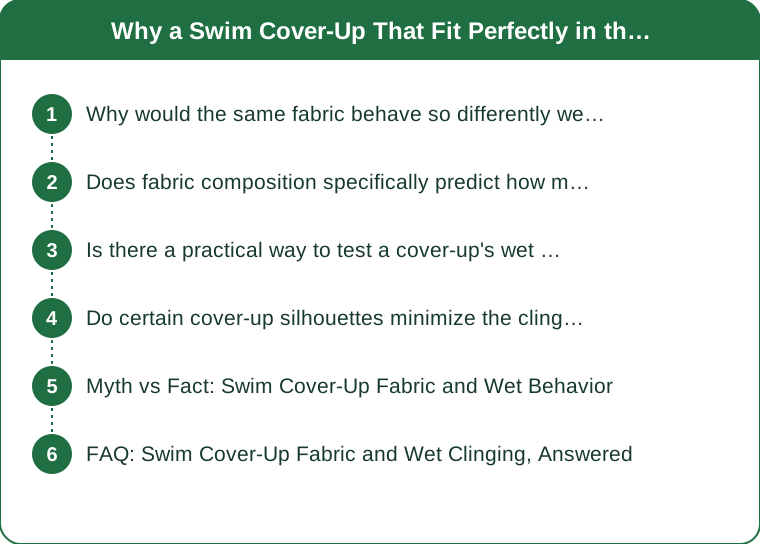
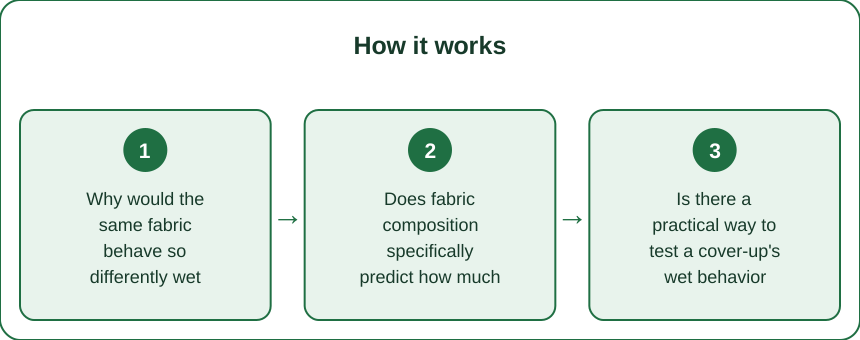
Why would the same fabric behave so differently wet versus dry?
Many lightweight woven and knit fabrics rely on trapped air between fibers to maintain their flowy, non-clinging drape when dry, and once moisture saturates the fabric, that trapped air is displaced, causing the material to flatten and lose its structured loft, which changes both how it drapes and how much it clings to the body’s contours. This is a physical property of the fabric itself, not a sizing or fit issue that a dry try-on would ever reveal.
Does fabric composition specifically predict how much a cover-up will cling once wet?
Yes, meaningfully — rayon and viscose-based fabrics, while soft and flowy when dry, tend to cling significantly more when wet due to how these fibers absorb and hold moisture, while fabrics with a higher synthetic content, particularly with some added structure or texture, tend to resist clinging better even when damp. Checking fabric composition on the label, not just how it feels dry, is a more reliable predictor of wet-behavior than the in-store try-on alone.
Is there a practical way to test a cover-up’s wet behavior before committing to it for a trip?
Lightly dampening a small area of the fabric with water at home, before the fabric has ever touched a pool, and observing how much it changes drape and opacity, is a simple, low-risk way to preview wet behavior without needing an actual pool test. This small test reveals far more about real-world cover-up behavior than any amount of dry try-on assessment.

Do certain cover-up silhouettes minimize the clinging effect even in a fabric prone to it?
Yes — a looser, less body-contouring silhouette to begin with gives clinging fabric less body surface area to cling against, meaningfully reducing the visual impact even in a fabric that does cling somewhat once wet. Pairing a more cling-prone fabric with a looser cut, rather than a fitted one, is a practical compromise when a specific fabric is otherwise a favorite.
Myth vs Fact: Swim Cover-Up Fabric and Wet Behavior
Myth: A cover-up’s dry try-on drape reliably predicts how it will look once wet. Fact: Many fabrics change drape and clinging behavior significantly once moisture displaces the trapped air that gives dry fabric its loft.
Myth: All lightweight, flowy fabrics behave similarly once wet. Fact: Fabric composition (rayon and viscose versus higher synthetic content) meaningfully predicts different wet-clinging behavior, even among fabrics that feel similar dry.
FAQ: Swim Cover-Up Fabric and Wet Clinging, Answered
Are there specific fabric types recommended for minimal wet-clinging behavior?
Fabrics with a higher polyester or nylon content, sometimes with added texture like a crinkle or waffle weave, tend to resist clinging noticeably better than rayon or viscose-heavy blends.
Does UPF-rated fabric behave differently when wet compared to non-UPF fabric?
UPF rating relates to sun protection, not moisture behavior specifically, so a UPF-rated fabric can still cling if its underlying fiber composition is prone to it — checking both properties separately is worthwhile.
Is it worth buying a cover-up specifically labeled as swim-specific, versus a general lightweight throw-on piece?
Swim-specific cover-ups are generally more likely to use fabric blends tested for wet behavior, making them a safer bet than repurposing a general lightweight piece not designed with pool or ocean contact in mind.
TL;DR:
- Many lightweight fabrics rely on trapped air for their dry drape, which moisture displaces once wet
- Rayon and viscose-heavy fabrics tend to cling significantly more when wet than higher-synthetic-content fabrics
- A small at-home dampening test previews real wet behavior far better than a dry in-store try-on
- A looser silhouette reduces the visual clinging impact even in a fabric that’s somewhat prone to it
A cover-up clinging unexpectedly once wet reflects a real, testable fabric property, not a fitting mistake — checking composition and doing a quick dampening test before a trip avoids the surprise entirely.
Keep Reading
This article is for general informational and styling purposes only. Fit, sizing, and product availability may vary.
