Why Does Indoor Pool Season Change What a Cover-Up Needs to Do?
Quick Answer: Outdoor cover-ups are designed for warmth-neutral conditions — light fabric, sun protection, quick drying in open air. Indoor swimming reverses every requirement: you need something that handles a hot humid poolside, then a cold changing area, then outdoor air on wet hair. That means absorbency and insulation matter more than breathability, and fabric that dries in a bag matters more than fabric that dries in sunshine.
The kaftan that was perfect in August is useless in October.
It is not doing anything wrong. It was built for a different problem.
This is general information, not medical advice.
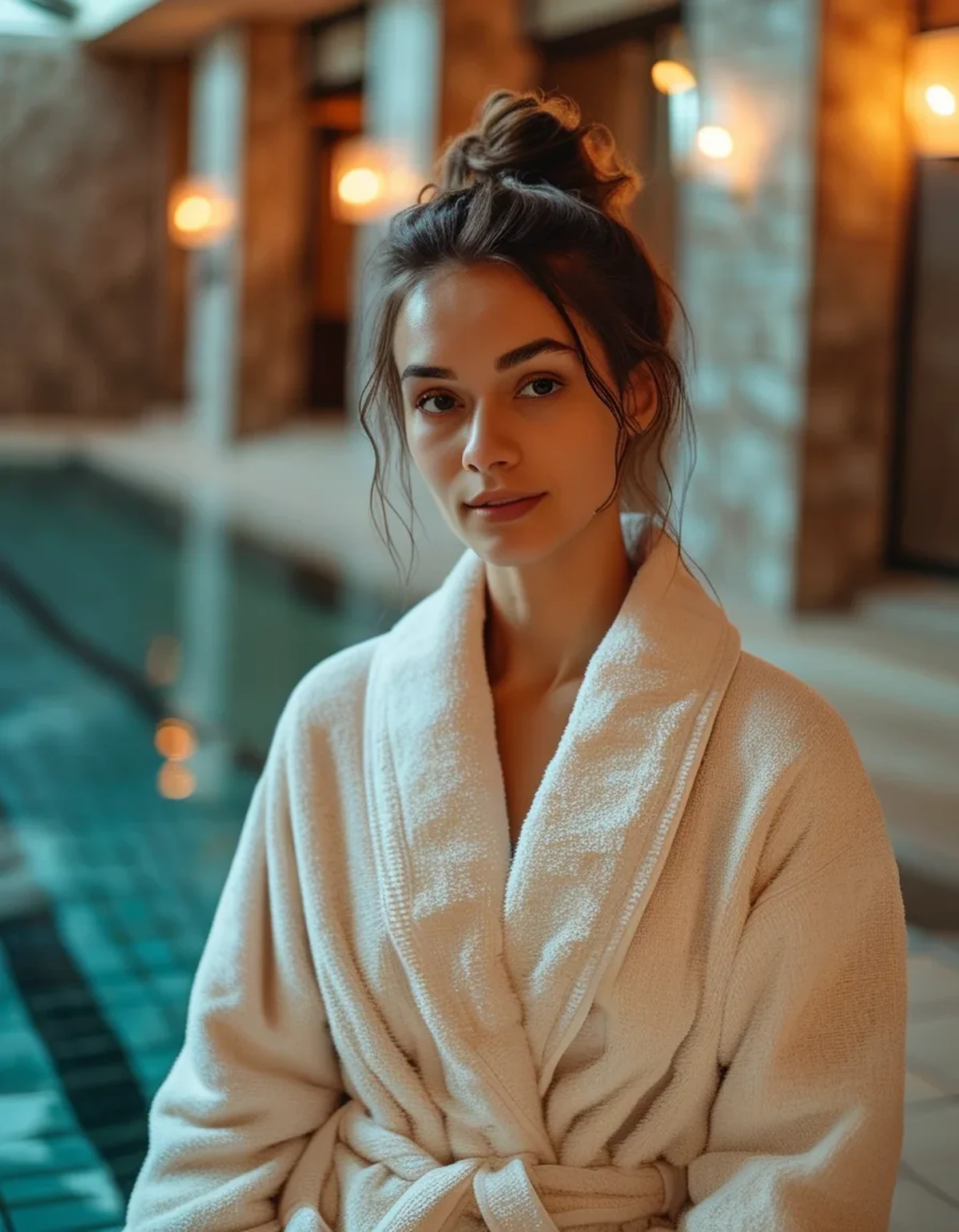
What is actually different about indoor swimming?
The sequence of environments, and how extreme the transitions between them are.
An outdoor swim in summer is essentially one environment. You are warm, the air is warm, and a cover-up is managing sun exposure and modesty rather than temperature.
An indoor swim in autumn is four environments in twenty minutes:
The poolside. Typically warm and very humid. Anything that does not breathe becomes uncomfortable quickly, and anything absorbent starts taking on moisture from the air alone.
The changing room. Frequently cooler than the poolside, often with wet floors and moving air. This is where most people get cold, and it is the environment cover-ups are least designed for.
The corridor and reception. Cooler again, often with doors to outside opening regularly.
Outside. In October this may be fifteen degrees colder than the poolside, and you have wet hair.
A garment optimized for the first environment fails in the last. What actually works is something that handles the transition — which is why towelling and fleece-lined robes have become the standard for anyone swimming through the colder months, having started as a cold-water swimming solution.
Is a robe overkill for an indoor pool?
For the poolside itself, arguably. For the twenty minutes afterwards, particularly if you have any distance to travel, it is the item that makes swimming through winter comfortable rather than something to endure.
What should the fabric actually do?
Three properties matter, in a different order than they do outdoors.
1. Absorbency comes first indoors. Outdoors you want quick-drying fabric that does not hold water. Indoors, in a cool changing room, you want something that takes water off you — because water on your skin is what makes you cold. Towelling, terry cotton, and microfibre all do this. Light woven cottons and linens do not.
2. Insulation matters at the point you stop moving. The changing room is where body temperature drops, because you have stopped swimming and you are wet. A layer with some loft — towelling, fleece lining, or a thick knit — holds warmth where a single-layer kaftan does not.
3. Drying in a bag, not in the sun. This is the practical constraint people discover after a week. An outdoor cover-up dries on a sun lounger. An indoor one goes into a bag damp and stays there until you get home. Fabrics that develop odour quickly when packed damp — heavy untreated cotton in particular — become unpleasant fast. Quick-drying microfibre and materials that tolerate frequent washing hold up better over a season.
Things that matter less indoors: sun protection, obviously; breathability, since exposure to the humid poolside is brief; and how it looks in bright sun, since indoor lighting is uniformly unflattering to everyone equally.
One thing that matters more: how easy it is to get changed underneath. A robe you can genuinely change inside removes the need for a cubicle queue, which is a substantial practical benefit at a busy pool.
Is a towel not enough?
A towel needs a hand to hold it. A robe leaves both hands free for a locker, a bag, a door, and children — which is why anyone swimming with kids ends up with one.
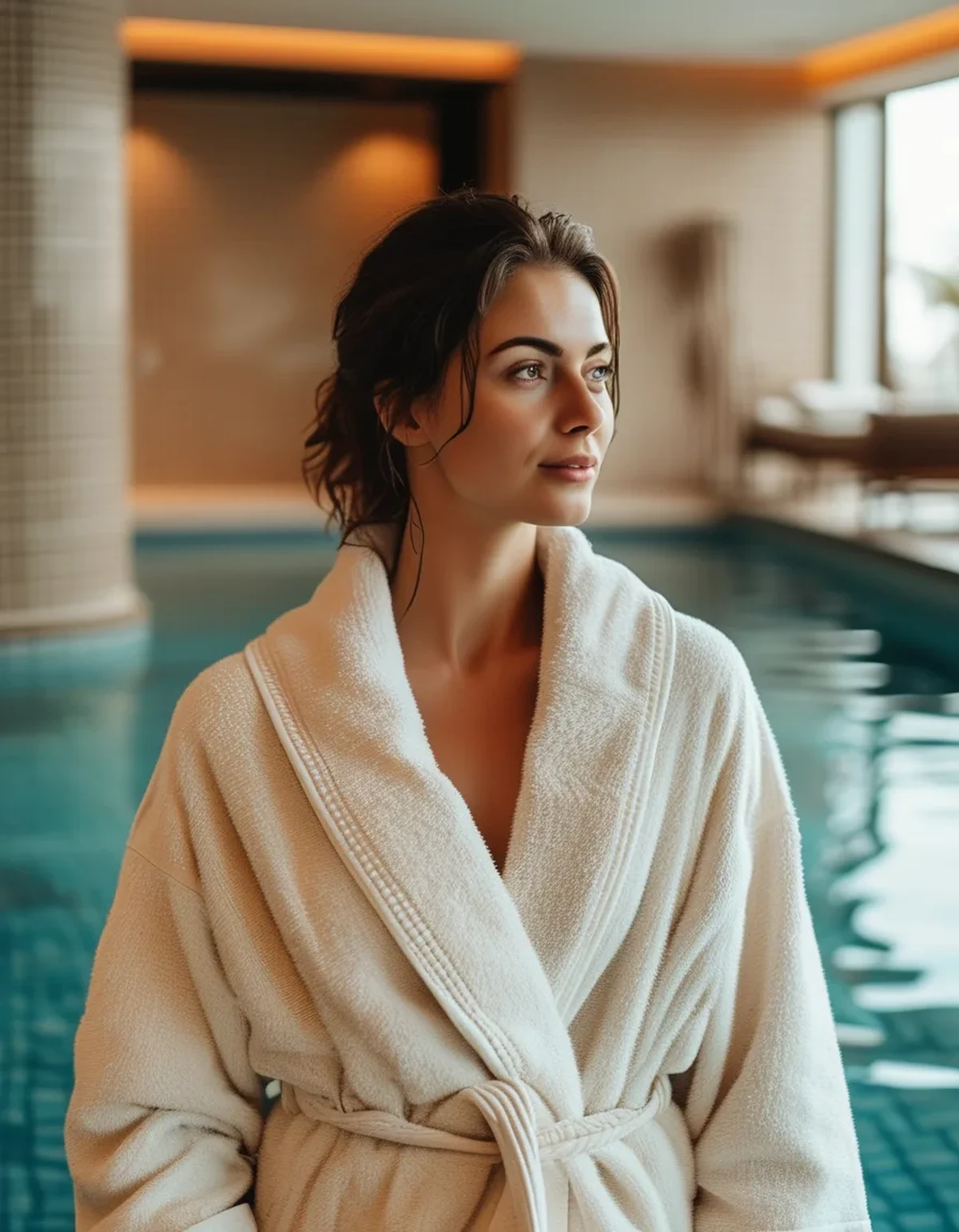
What to look for when choosing one
Sleeves, and long ones. The single most common regret. Arms get cold first in a changing room, and a sleeveless cover-up leaves the part that cools fastest exposed. Long sleeves also mean you can walk to the car without a separate coat.
A hood. Wet hair loses heat quickly, and a hood addresses that at the exact point you leave the building. It also means you can skip drying your hair fully, which shortens the whole process considerably.
Length to at least mid-thigh. Enough to change underneath and enough to keep the legs covered on a cold walk out.
Something to close it. A zip, poppers, or a wrap with a proper tie. An open-fronted garment does very little in a draughty corridor, and a belt that comes undone every time you move is a daily irritation.
Pockets. Locker key, phone, coins. Once you have had them you will not choose a robe without them.
Check the sizing generously. These are worn over a wet swimsuit and often over clothes on the way out, and they need to be loose enough to change inside. Sizing that fits closely defeats most of the purpose.
Weight, if you carry it far. A heavy towelling robe is warm and bulky in a bag. Microfibre versions are lighter and less insulating. If you drive to the pool, weight barely matters; if you walk or cycle, it matters a lot.
Are the fleece-lined outdoor swimming robes suitable for pool use?
They are warmer than most people need for an indoor pool, and they are excellent if you have a cold walk to the car or swim early in the morning. The waterproof outer is genuinely useful in autumn rain.
5 mistakes people make with indoor swim cover-ups
1. Reusing a summer beach cover-up. Light woven fabric designed to keep sun off does almost nothing in a cool changing room. It is the most common approach and the least effective.
2. Choosing sleeveless. Arms and shoulders cool fastest when you are wet and standing still. Sleeves are the difference between comfortable and shivering.
3. Buying too fitted. These garments need to work over a wet swimsuit, allow changing underneath, and go over clothes on the way out. Fitted defeats all three.
4. Ignoring how it dries. A robe that goes into a bag damp four times a week needs to tolerate that. Heavy cotton that stays wet for two days and develops a smell becomes something you stop taking.
5. Forgetting the walk to the car. The pool is warm and the car park is not. Most cover-up disappointment happens in the last two minutes of the trip, and choosing for that moment rather than for the poolside solves it.
FAQ: Indoor Pool Cover-Up Questions, Answered
Do I need a different one for winter and summer?
Most regular swimmers end up with two — something light for outdoor and summer use, and something absorbent and warm for indoor and colder months. They are genuinely different tools.
Is microfibre or cotton towelling better?
Microfibre is lighter, dries faster, and packs smaller. Cotton towelling is more absorbent and feels warmer. For carrying to and from a pool several times a week, microfibre usually wins on practicality; for comfort at home afterwards, towelling.
How do I stop it smelling?
Hang it to dry as soon as you get home rather than leaving it in the bag, and wash it regularly. Most odour comes from a damp garment left packed, not from the swimming itself.
Can I change underneath a robe in the changing room?
That is one of the main reasons people buy them, and a generously sized one with a proper closure makes it straightforward. It also avoids the cubicle queue.
What about chlorine damage?
Chlorine is harder on swimwear elastane than on outer layers, and rinsing and washing regularly is sensible either way. Cover-ups generally last considerably longer than the swimsuit under them.
Is it worth it if I only swim once a week?
If that swim is in autumn or winter, the twenty minutes afterwards is the part that determines whether you keep going. It is a small purchase against that.
TL;DR:
- Indoor swimming is four environments in twenty minutes, ending outside with wet hair.
- Indoors, absorbency and insulation matter more than the breathability and sun protection an outdoor cover-up provides.
- Choose sleeves, a hood, mid-thigh length, a proper closure, and pockets.
- Size generously so you can change underneath and wear it over clothes on the way out.
- Consider how it dries in a bag, not how it dries in the sun.
The summer cover-up was built for a different problem. The autumn one is judged entirely on the last two minutes in the car park.
This is general information, not medical advice.
Keep Reading
This article is for general informational and styling purposes only. Fit, sizing, and product availability may vary.
