Which Swimsuit Fabrics Actually Resist Fading, Pilling, and Chlorine Damage?
Quick Answer: Look for swimwear labeled with a high percentage of PBT or chlorine-resistant polyester blends rather than standard spandex-heavy nylon — these hold color and shape significantly longer against chlorine and sun exposure, and simple care habits like rinsing immediately after swimming extend any suit’s lifespan considerably.
A suit that fades or pills after a handful of swims usually isn’t a fluke — it’s often a specific, predictable fabric composition issue.

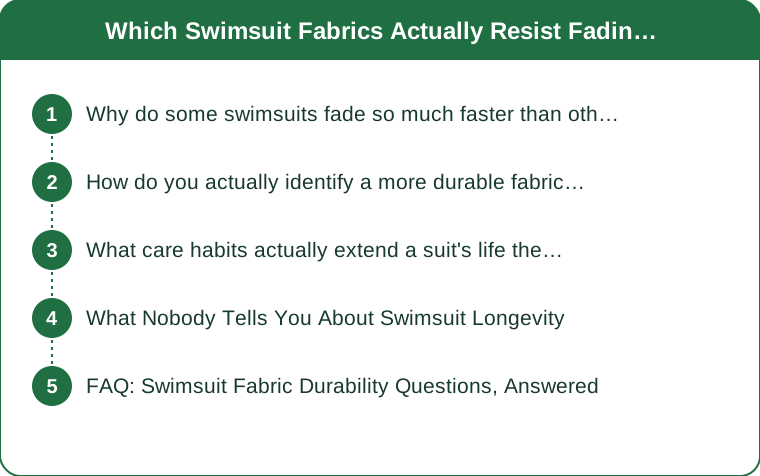
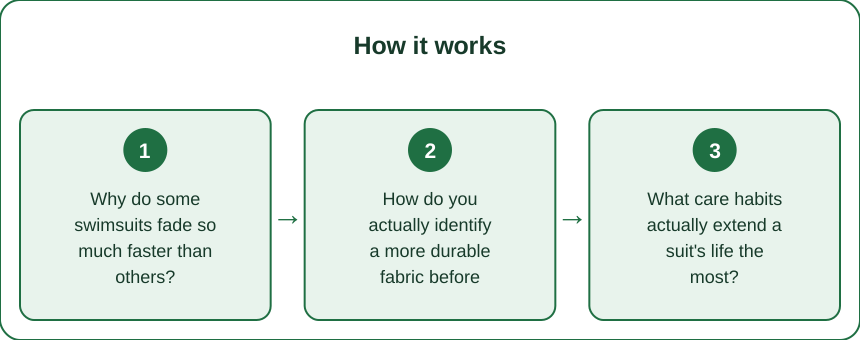
Why do some swimsuits fade so much faster than others?
Chlorine breaks down standard spandex and nylon fibers relatively quickly with repeated exposure, causing both color fading and loss of elasticity (that stretched-out, saggy feeling in an aging suit). PBT (polybutylene terephthalate) and specifically chlorine-resistant polyester blends are engineered to resist this breakdown far better, holding both color and shape through significantly more pool exposure.
Sun exposure compounds the chlorine effect — UV rays independently degrade fiber and dye over time, which is why suits used primarily in outdoor chlorinated pools tend to fade fastest of all.
How do you actually identify a more durable fabric before buying?
Check the fabric content label specifically for PBT or terms like “chlorine-resistant” or “chlorine-proof” in the product description — this information is increasingly listed for swimwear marketed toward frequent swimmers, though it’s easy to miss if you’re not specifically looking for it. Standard nylon-spandex blends (common in fashion-forward, less swim-specific suits) tend to be the least durable against chlorine specifically.
A higher price point often, though not always, correlates with better fabric technology in this specific category — it’s worth reading the actual fabric composition rather than assuming price alone guarantees durability.

What care habits actually extend a suit’s life the most?
Rinsing in cool fresh water immediately after swimming — before chlorine has time to sit and continue reacting with the fibers — is the single most impactful habit, more so than which specific detergent is used afterward. Air drying away from direct sun (rather than in strong sunlight or a dryer) prevents additional UV and heat damage.
Avoid wringing out a wet suit forcefully, which stresses fibers unnecessarily — gently pressing out excess water in a towel preserves elasticity better than twisting or wringing.
What Nobody Tells You About Swimsuit Longevity
Rotating between two suits, rather than wearing one suit for every single swim, roughly doubles the effective lifespan of both, since each gets more recovery time between chlorine exposures and less cumulative wear. This is a simple, underused strategy compared to focusing purely on fabric technology alone.
Also underrated: hot tubs are often harder on swimwear fabric than pools, due to higher chlorine concentration and heat combined — a suit reserved for hot tub use specifically (rather than your primary pool suit) can meaningfully extend your main suit’s life.
FAQ: Swimsuit Fabric Durability Questions, Answered
Is chlorine-resistant fabric worth the typically higher price?
For frequent swimmers (multiple times weekly), yes — the extended lifespan usually offsets the higher upfront cost within one to two seasons compared to replacing a standard suit repeatedly.
Does darker fabric fade less visibly than lighter or bright colors?
Darker colors can show less visible fading initially, but the underlying fiber degradation happens at a similar rate — fabric composition matters more than color choice for actual durability.
How often should a heavily used swimsuit realistically be replaced?
Even a durable, well-cared-for suit used multiple times weekly often shows meaningful wear within one to two seasons — rotating suits and proper rinsing habits extend this, but eventual replacement is normal and expected.
TL;DR:
- PBT and chlorine-resistant polyester blends hold color and shape far longer than standard nylon-spandex
- Rinsing in fresh water immediately after swimming is the single most impactful care habit
- Air dry away from direct sun rather than in a dryer or strong sunlight
- Rotating between two suits roughly doubles each suit’s effective lifespan
Keep Reading
This article is for general informational and styling purposes only. Fit, sizing, and product availability may vary.
