The Swim Cover-Up Mistake That Makes Chlorine Smell Stick Around for Days
Quick Answer: Lingering chlorine smell almost always comes from letting a damp cover-up sit balled up in a bag or hamper instead of rinsing and fully air-drying it immediately after swimming — chlorine residue bonds to synthetic fibers more stubbornly when it dries while damp and compressed, rather than rinsed and laid flat.
The smell isn’t really about how much chlorine was in the pool. It’s almost entirely about what happens to the cover-up in the hour after you take it off.

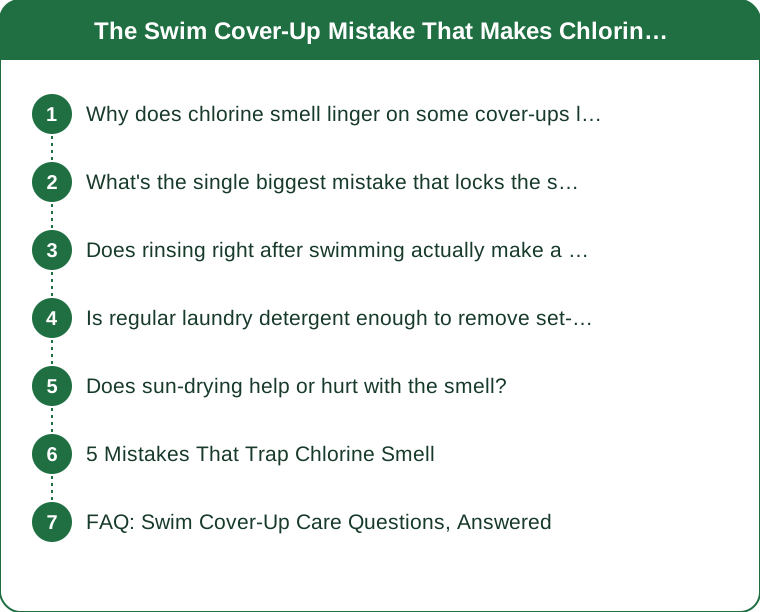
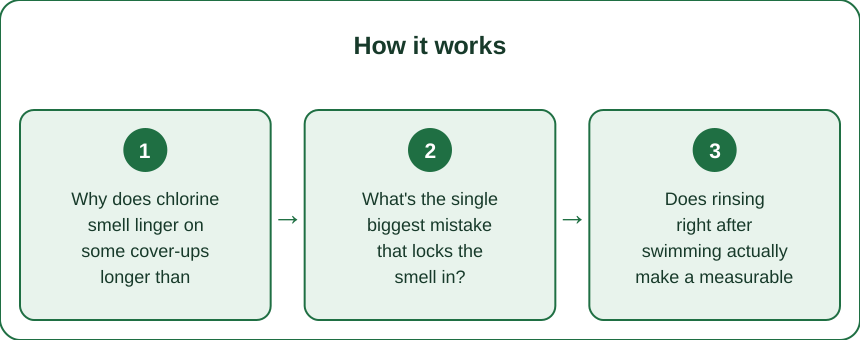
Why does chlorine smell linger on some cover-ups longer than others?
Synthetic fabrics (polyester, nylon blends) tend to trap chlorine compounds in their fibers more than natural fibers do, and that trapping gets worse when the fabric dries while still damp and folded rather than rinsed and laid flat immediately.
What’s the single biggest mistake that locks the smell in?
Leaving a wet cover-up balled up in a swim bag for even a few hours — the combination of trapped moisture, heat, and lack of airflow lets chlorine residue set into the fabric in a way that’s much harder to wash out afterward.
Does rinsing right after swimming actually make a measurable difference?
Yes, significantly — a quick fresh-water rinse within the first 30 minutes after swimming removes most surface chlorine before it has time to bond more deeply into the fibers, cutting lingering odor dramatically compared to rinsing hours later.

Is regular laundry detergent enough to remove set-in chlorine smell?
Often not entirely — for cover-ups that already smell days later, a pre-soak in water with a small amount of baking soda or white vinegar before regular washing helps break down residue that standard detergent alone tends to miss.
Does sun-drying help or hurt with the smell?
It helps with odor — UV exposure helps break down some chlorine compounds — but prolonged direct sun can fade fabric color over time, so a bright, airy indoor spot or brief sun exposure is a reasonable middle ground.
5 Mistakes That Trap Chlorine Smell
- Balling up a wet cover-up in a bag instead of rinsing and laying it flat.
- Delaying rinsing for hours, letting residue bond deeper into fibers.
- Washing with fabric softener, which can coat fibers and trap odor rather than release it.
- Storing a damp cover-up in a closed drawer before it’s fully dry.
- Reusing the same cover-up multiple pool days in a row without a full wash cycle in between.
FAQ: Swim Cover-Up Care Questions, Answered
Does chlorine smell mean the fabric is being damaged?
Not necessarily immediately, but repeated chlorine exposure without proper rinsing does degrade elastic and fabric fibers faster over time, so the same care habit protects both smell and longevity.
Is a mesh laundry bag helpful for cover-up care?
Yes — it allows a quick rinse cycle without tangling delicate fabric, and can be tossed straight into a bag for travel once dry.
Can this same lingering-smell issue happen with swimsuits, not just cover-ups?
Yes, the same rinse-and-dry-flat principle applies to swimsuits and often matters even more since they’re in more direct, prolonged contact with pool water.
TL;DR:
- Lingering chlorine smell mostly comes from damp, balled-up storage, not pool water itself
- Rinsing within 30 minutes of swimming removes most residue before it sets in
- A baking soda or vinegar pre-soak handles smell that’s already set into fabric
- Fabric softener can trap odor rather than release it — skip it for swimwear
Next pool day, rinse the cover-up in the shower before it even goes in your bag — that one habit change usually solves the problem without needing a special wash routine.
Keep Reading
This article is for general informational and styling purposes only. Fit, sizing, and product availability may vary.
