Why Some Swim Cover-Up Fabrics Break Down Faster From Chlorine Than Others
Quick Answer: Chlorine breaks down the elastic fibers in many stretch fabrics faster than it affects the base fabric itself, so a cover-up with a high spandex or elastane content, even if labeled ‘swimwear,’ can lose shape and durability faster than one made from chlorine-resistant fibers like certain polyester blends specifically engineered to resist the breakdown.
Not all fabrics marketed for pool use hold up to actual chlorine exposure equally, and the label ‘swim cover-up’ alone doesn’t guarantee chlorine resistance.

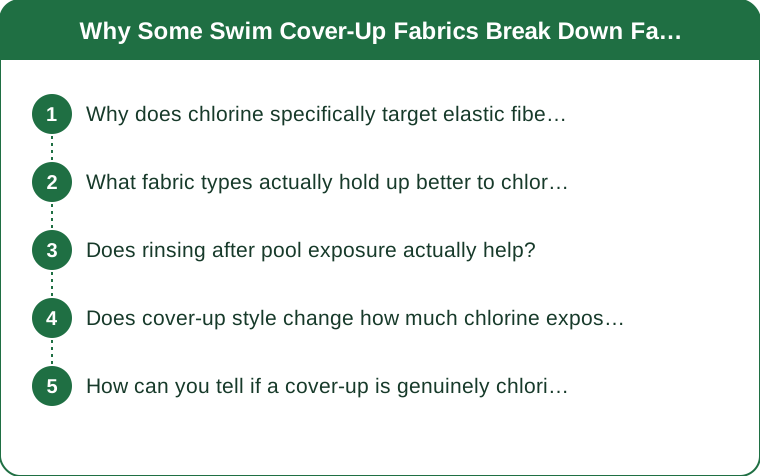
Why does chlorine specifically target elastic fibers?
Chlorine molecules chemically break down the polymer chains in spandex and traditional elastane fibers faster than they affect more chemically stable fibers, which is why a stretchy cover-up can start losing its recovery and feeling looser or more worn well before the base fabric shows visible wear.
What fabric types actually hold up better to chlorine?
Fabrics specifically engineered as ‘chlorine-resistant’ polyester blends are formulated to resist this chemical breakdown significantly better than standard spandex-blend fabrics, which is why swimwear specifically marketed as chlorine-resistant tends to outlast a cover-up using standard stretch fabric even under similar exposure.

Does rinsing after pool exposure actually help?
Yes, meaningfully — chlorine continues reacting with fabric fibers as long as residue remains, so rinsing in fresh water promptly after swimming measurably slows the cumulative degradation process compared to letting a garment air dry with pool water still in the fabric.
Does cover-up style change how much chlorine exposure matters?
Somewhat — a cover-up worn dry, only occasionally getting splashed, faces much less cumulative chlorine exposure than one regularly worn wet directly after swimming, so the fabric-durability concern matters most for cover-ups that double as a quick in-and-out-of-the-pool layer.
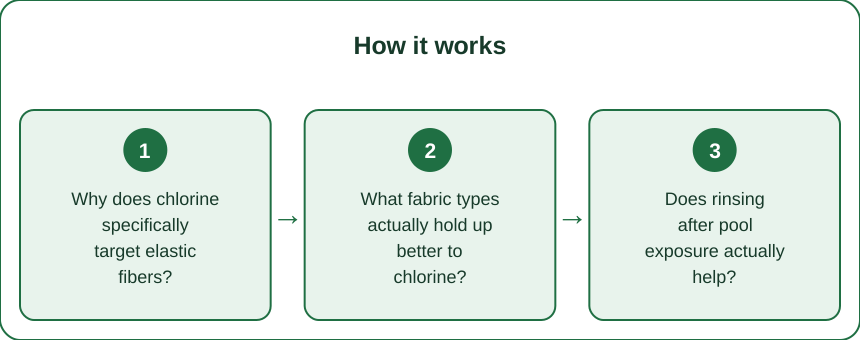
How can you tell if a cover-up is genuinely chlorine-resistant before buying?
Checking for fabric composition on the label — specifically for chlorine-resistant polyester or similarly engineered fibers, rather than a high percentage of standard spandex — and looking for explicit chlorine-resistance claims from the manufacturer are the most reliable ways to know before committing to a purchase.
TL;DR:
- Chlorine breaks down elastic fibers faster than it affects the base fabric
- Chlorine-resistant polyester blends hold up meaningfully better than standard spandex
- Prompt rinsing after pool exposure slows cumulative fabric degradation
- Checking fabric composition labels before buying avoids relying on marketing alone
A cover-up worn dry most of the time faces far less of this concern than one worn wet after every swim.
Keep Reading
This article is for general informational and styling purposes only. Fit, sizing, and product availability may vary.
